
Backyard trampolines seem like a fun way for kids to get some energy out, but they can actually be pretty dangerous. Pediatricians are pretty clear on this: they really don’t recommend letting kids jump on them for fun. The numbers show that child trampoline injuries are a big problem, and it’s not just about a few scrapes. Serious stuff happens, and we need to talk about why.
Table of Contents
ToggleKey Takeaways
- Experts strongly advise against kids using trampolines for play.
- Many child trampoline injuries happen when more than one person is jumping.
- Younger kids are at a higher risk for bad injuries, like broken bones and spine problems.
- Falls onto or off the trampoline are common causes of injury.
- Always have a grown-up watching and stick to one jumper at a time to lower risks.
Understanding The High Risk Of Child Trampoline Injuries
Why Pediatricians Advise Against Trampoline Use
Lots of us remember bouncing on trampolines as kids, maybe in the backyard or at a friend’s house. They seem like pure fun, right? But here’s the thing: doctors, especially those who work with kids, are really not fans of trampolines for home use. The American Academy of Pediatrics, for example, has come out saying they’re just too risky for regular play. They’re not like a swing set or a slide; they’re more like equipment used in sports training, and even then, they need a lot of supervision. The main worry is that kids get hurt – a lot. We’re talking about broken bones, sprains, and sometimes much worse. It’s why they suggest skipping the backyard trampoline altogether.
The Alarming Statistics of Trampoline Accidents
When you look at the numbers, it’s pretty eye-opening. Reports show that hundreds of thousands of kids end up in emergency rooms every year because of trampoline accidents. A big chunk of these injuries happen when more than one person is jumping at the same time. It’s easy to see why: when kids of different sizes and weights are bouncing, someone can easily get thrown off balance or land on someone else. Even with safety nets, which do help stop kids from falling off completely, injuries still happen. It seems like kids are just really good at finding ways to get hurt on these things, no matter how many safety features are added.
Trampolines Are Not Toys
It’s easy to think of a trampoline as just another backyard toy, something fun for the kids to burn off energy. But that’s a dangerous way to look at it. These aren’t simple toys; they’re pieces of equipment that can cause serious harm. The forces involved in bouncing can be pretty intense, and when you add in the unpredictable movements of kids playing, the risk goes way up. Pediatricians and safety experts stress that trampolines should be treated with extreme caution, not as casual playthings. They’re more like athletic equipment that requires specific training and supervision to use safely, which is why they’re often banned from regular home use.
Common Scenarios Leading To Child Trampoline Injuries
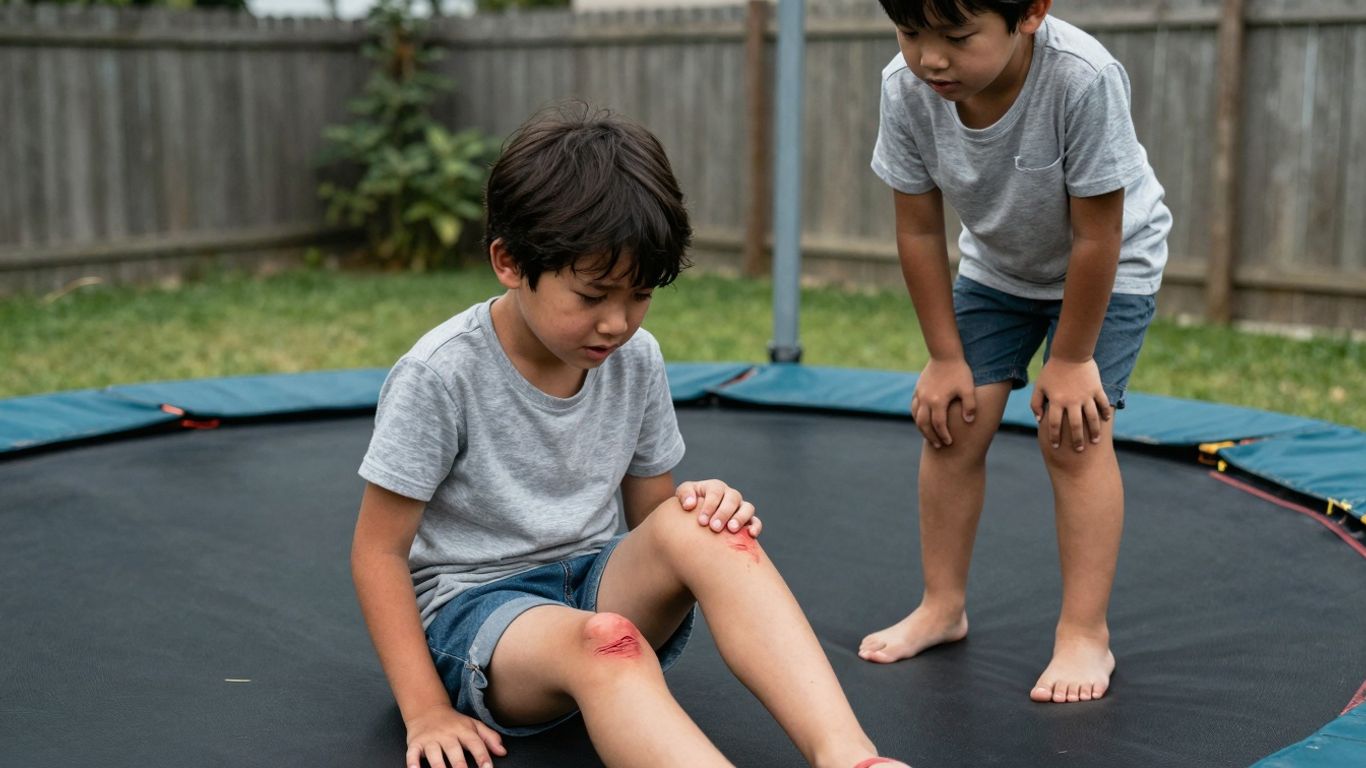
It might seem like a simple backyard bounce, but trampolines are surprisingly dangerous places for kids. Most of the time, injuries don’t happen because a child is doing something wild. Often, it’s the everyday ways kids use them that lead to trouble. The biggest culprit? Having more than one person jumping at once. It sounds obvious, but the physics of bouncing just don’t work well with multiple jumpers. When one person lands, they can send the other flying in an unpredictable direction, or land on them awkwardly.
The Danger of Multiple Jumpers
When two or more kids share a trampoline, the risk of collision and uncontrolled bounces skyrockets. One child’s landing can send another airborne unexpectedly, leading to awkward falls. This is especially true when there’s a big size difference between the jumpers. It’s not just about bumping into each other; it’s about the forces involved. A heavier child landing can create a much larger upward force for a lighter child, leading to heights they aren’t prepared for.
Falls On And Off The Trampoline
Falls are, by far, the most common way kids get hurt on trampolines. This includes falling onto the mat itself, often in an awkward way, or worse, falling off the edge. Even with safety nets, kids can still tumble over the side, especially if they’re pushed by another jumper or lose their balance. Landing wrong on the mat can twist ankles or knees, and falling off can lead to much more serious injuries depending on what’s below.
Risky Stunts And Unsupervised Play
While many injuries happen from simple falls, attempting stunts like flips or somersaults dramatically increases the danger. Kids often try these without the proper training or supervision, leading to bad landings and serious injuries. Even just jumping off a ladder or other object onto the trampoline can be incredibly risky. Without an adult actively watching and setting clear boundaries, kids might push their limits in ways that lead to harm. It’s easy for a fun afternoon to turn into a trip to the emergency room when play gets a little too adventurous and adult supervision isn’t present.
Many parents think safety nets and even adult presence are enough to prevent injuries. However, research shows that these measures don’t eliminate the risk, especially when multiple children are jumping or when kids attempt advanced maneuvers without proper training. The inherent instability of the trampoline surface combined with unpredictable movements makes it a hazardous environment for unsupervised play.
Specific Vulnerabilities In Young Children
When it comes to trampolines, little kids are just not built for the bouncing. Their bodies are still developing, making them way more prone to serious harm than older kids or adults. It’s not just about a scraped knee; we’re talking about injuries that can have lasting effects.
Why Children Under Six Are At Greatest Risk
Children under the age of six are in a whole different category of risk. Their coordination isn’t fully developed, their bones are softer, and they often don’t grasp the dangers involved. This makes them particularly vulnerable to falls and awkward landings. Experts strongly advise against any trampoline use for children under six. It’s a simple rule that can prevent a lot of heartache.
The Impact On Developing Bones And Spines
Young children’s bones are still growing and are more flexible. This means they can bend and break more easily than adult bones. A hard landing or a fall in the wrong way can lead to fractures, especially in the arms and legs. Even more concerning is the risk to their developing spines. The forces involved in bouncing can put immense stress on a child’s spine, potentially leading to serious injuries like fractures or dislocations.
Severe Injuries Requiring Surgical Intervention
Unfortunately, trampoline accidents involving young children don’t always end with a simple bruise. Studies show that younger children are more likely to need surgery after a trampoline injury compared to those hurt in other settings. These aren’t minor procedures; they can involve complex orthopedic surgeries to repair broken bones or address spinal damage. The recovery can be long and difficult, impacting a child’s development and ability to participate in normal childhood activities.
Here’s a look at some common injury types:
- Fractures: Broken bones, particularly in the arms, legs, and wrists.
- Sprains: Ligament injuries, often in the ankles and knees.
- Head Injuries: Concussions and other traumatic brain injuries from falls.
- Spinal Injuries: Though less common, these are the most devastating, with the potential for paralysis.
The forces generated by a trampoline can be unpredictable, especially for a small child who lacks the muscle control and spatial awareness to brace for impact or maintain balance. This makes them susceptible to injuries that might be less severe in older individuals.
The Spectrum Of Trampoline-Related Harm
Fractures And Sprains: The Most Frequent Injuries
When kids bounce on trampolines, the most common things that happen are broken bones and twisted joints. We’re talking about arms, legs, wrists, and ankles. A lot of these happen when a child falls awkwardly, maybe landing on an outstretched hand or twisting their ankle. It’s pretty common for the forearm bones, the radius and ulna, to break, often from trying to catch themselves. Sprains and strains are also super frequent, especially in the ankles.
Serious Spinal Cord And Head Trauma
While broken arms are common, the really scary stuff involves the head and spine. There are reports of serious neck injuries, sometimes leading to paralysis. These can happen from bad falls or when kids try flips and tricks they aren’t ready for. Even with safety nets, these severe injuries can still occur, which is why doctors worry so much about trampolines. Head injuries, like concussions, can also happen from hitting the trampoline frame or another jumper.
Long-Term Consequences Of Trampoline Accidents
It’s not just about the immediate pain and cast. Some trampoline injuries can have lasting effects. Repeated fractures might affect how a bone grows. Spinal cord injuries can change a person’s life forever. Even less severe injuries, if they happen often, can lead to chronic pain or joint problems down the road. It really highlights why preventing these accidents in the first place is so important.
Trampoline accidents can range from minor bumps and bruises to life-altering injuries. The unpredictable nature of bouncing, combined with the potential for collisions and awkward landings, means that even with safety precautions, serious harm is a real possibility for children.
Here’s a quick look at what can happen:
- Fractures: Most often in arms, wrists, legs, and ankles.
- Sprains and Strains: Twisting of joints, especially ankles and knees.
- Head Injuries: Concussions and bumps from falls or collisions.
- Spinal Injuries: From severe falls, potentially leading to paralysis.
- Dislocations: Joints popping out of place.
Mitigating Risks For Child Trampoline Injuries
Look, trampolines can be a lot of fun, but let’s be real, they’re also a recipe for disaster if you’re not careful. It’s not just about having one in the backyard; it’s about how you use it and what precautions you take. Thinking about safety first can make a huge difference in keeping those bumps and bruises to a minimum.
The Single Jumper Rule
This is probably the most important rule, and honestly, it’s not that hard to follow. When more than one person is bouncing, things get unpredictable. Different weights and heights mean different bounce patterns, and that’s when collisions happen. Only allowing one child on the trampoline at a time drastically cuts down on the chances of them crashing into each other. It might seem boring to take turns, but it’s way better than a trip to the emergency room.
Importance Of Constant Adult Supervision
Kids, especially younger ones, don’t always grasp the full danger. They get excited and might try something risky without thinking. Having a grown-up watching means you can step in if someone starts doing flips they shouldn’t, or if things just look a little too wild. It’s not about hovering, but about being present and ready to say, "Hey, slow down" or "Maybe let’s not do that."
- Always have an adult who knows the safety rules present.
- Keep an eye on the number of jumpers.
- Watch for risky behavior like trying to jump off the trampoline onto other surfaces.
Safe Trampoline Placement And Maintenance
Where you put the trampoline matters. You don’t want it near fences, trees, or buildings. A fall off the side can be just as bad as a fall on the mat. And don’t forget to check the equipment regularly. Are the pads worn out? Is the safety net ripped? These things need to be fixed or replaced. A trampoline that’s falling apart is a dangerous trampoline.
Trampolines aren’t just simple backyard toys. They require careful setup and ongoing attention to safety features to prevent serious harm. Regular checks of padding, nets, and the overall structure are non-negotiable if you want to keep kids safe.
Here’s a quick rundown of what to look for:
- Padding: Check for tears or compression. It should cover all springs and the frame completely.
- Safety Net: Ensure it’s securely attached and free of holes or weak seams. Keep it zipped closed during use.
- Frame and Springs: Look for rust, bending, or loose connections.
- Surface: Make sure the mat is taut and has no holes.
- Placement: Ensure it’s on level ground, away from hazards.
When Trampoline Parks Pose Risks
Age Restrictions And Safety Waivers
Trampoline parks are a big draw for kids, and while they might seem like a fun way to burn off energy, they come with their own set of dangers. For starters, many parks have age limits, and for good reason. Younger kids, especially those under six, are just not built for the kind of bouncing that happens in these places. Their developing bones and bodies can’t handle the impact as well as older kids or adults. Before you even let your child step onto the mat, you’ll probably have to sign a waiver. This document basically says you understand the risks involved and that the park isn’t responsible if your kid gets hurt. It’s super important to actually read it and know what you’re agreeing to. Some waivers might limit what activities your child can do, or they might exclude coverage for certain types of injuries.
Navigating Crowded Trampoline Environments
Think about a busy Saturday afternoon at a trampoline park. It’s packed. Lots of kids, all bouncing around, sometimes from one trampoline to another. This is where things can get dicey. The more people there are, the higher the chance of collisions. It’s not just about bumping into someone; it’s about the unpredictable ways people can fly through the air and land. A study showed that people getting hurt at these parks are twice as likely to need surgery compared to those injured on home trampolines. It’s a lot more intense than bouncing in your backyard.
Understanding Different Bouncing Surfaces
Trampoline parks aren’t just one big bouncy floor. They have different areas – foam pits, angled trampolines, even basketball hoops. While these add to the fun, they also add to the risk. Foam pits might seem soft, but landing wrong can still cause injuries. The angled trampolines can send you flying in unexpected directions. And trying to dunk a basketball when you’re already bouncing high? That’s a recipe for disaster for many kids. It’s a lot to keep track of, and kids, especially younger ones, might not grasp how different each surface behaves and the unique dangers it presents.
Trampoline parks can be a lot of fun, but they also come with dangers. Jumps and flips can lead to serious injuries if not done carefully. It’s important to be aware of the risks involved. For more information on how to stay safe, visit our website.
So, What's the Takeaway?
Look, trampolines seem like a lot of fun, and for kids, they really are. But we’ve seen how easily things can go wrong, especially with younger ones. Broken bones, serious back injuries – it’s a real risk. Experts pretty much agree that for backyard fun, trampolines are just too risky for kids. If you do have one, strict rules like only one jumper at a time and constant adult watching are a must. But honestly, the safest bet is to skip the backyard trampoline altogether. There are plenty of other ways for kids to burn off energy without putting them in harm’s way.
Frequently Asked Questions
Why are trampolines considered so dangerous for kids?
Trampolines can be really risky because they’re not like regular playgrounds. When kids jump, they can easily lose control and fall in awkward ways. This can lead to broken bones, sprains, and even serious injuries to the head and spine. Experts, like pediatricians, often advise against using them for fun because the risk of getting hurt is so high.
What age group is most likely to get hurt on a trampoline?
Kids under the age of six are at the highest risk for really bad injuries. Their bodies are still growing and developing, making them more fragile. Older kids and teens also get hurt a lot, especially when they try stunts or when there are too many people jumping at once. Most injuries happen to kids between 5 and 15 years old.
What are the most common types of trampoline injuries?
The most frequent injuries are broken bones, like in the arms and legs, and sprains, which are injuries to ligaments. Sadly, some kids suffer much more serious harm, including injuries to their head, neck, and spine. These severe injuries can sometimes require surgery and might even have long-lasting effects.
What makes multiple people jumping on a trampoline so dangerous?
When more than one person jumps at the same time, it drastically increases the danger. It’s hard to predict where someone will land, and one person can easily bounce into another. This often leads to falls on the trampoline mat or off the side, and the risk of serious injury goes way up, especially if there’s a big size difference between the jumpers.
Are trampoline parks safer than backyard trampolines?
While trampoline parks have safety rules, they can still be risky. Parks often have many different jumping surfaces and can get very crowded, which means more chances for collisions. It’s important to follow their rules, like age limits and only jumping in designated areas, and to always have a grown-up watching closely.
What are the best ways to prevent trampoline injuries?
The safest approach is to avoid trampolines altogether. However, if you choose to have one, strict rules are essential. Always have only one person jumping at a time, ensure constant adult supervision, and never allow flips or dangerous stunts. Keep the trampoline away from fences or trees, check for damage regularly, and make sure safety nets and pads are in good condition.