A day at a trampoline park sounds like a lot of fun, right? Bouncing around, maybe trying a flip or two. But let’s be real, it’s not all fun and games. Trampoline park injuries are a pretty common thing, and knowing what can happen and why is super important if you’re planning a visit. We’re going to break down the most frequent injuries, what causes them, and how you can try to avoid them. It’s all about having a good time safely.
Table of Contents
ToggleKey Takeaways
- Sprains and strains, especially in the ankles and knees, are the most common trampoline park injuries due to the stress of jumping and landing.
- Fractures and dislocations often happen when landing incorrectly or trying to break a fall with an outstretched limb.
- Head, neck, and spinal injuries are the most serious risks, often resulting from flips gone wrong or collisions, and can lead to severe consequences.
- Cuts, abrasions, and bruises are frequent but usually minor, often caused by friction or bumping into park structures.
- Understanding and following park rules, like one jumper per trampoline and avoiding risky tricks, is vital for preventing common trampoline park injuries.
1. Sprains and Strains
When you’re bouncing around at a jump park, your body is doing some pretty intense stuff. All that jumping, twisting, and landing puts a lot of stress on your muscles and the little bands of tissue that connect your bones – your ligaments. It’s no surprise then that sprains and strains are super common injuries here.
Think about it: you’re trying to land a jump, maybe you don’t quite stick it, and your ankle twists the wrong way. That’s a classic ankle sprain. Or maybe you land a bit awkwardly and feel a sharp pull in your knee or thigh – that’s likely a muscle strain. These happen when ligaments or muscles get stretched too far or even torn.
Here are some common ways these injuries happen:
- Landing awkwardly: Not quite getting your feet under you when you land can easily twist an ankle or knee.
- Sudden stops or changes in direction: Trying to stop your momentum quickly or changing direction mid-air can put a lot of strain on your joints.
- Overexertion: Just like any physical activity, pushing yourself too hard when you’re tired can lead to poor form and increase your risk of pulling a muscle.
- Collisions: Bumping into someone else while you’re both jumping can throw off your balance and lead to a bad landing.
The most frequent culprits are ankle and knee injuries, often happening because of a simple misstep or an unexpected bounce. It’s easy to get caught up in the fun and forget to focus on your landing, but that’s exactly when these injuries tend to occur.
While jump parks are designed for fun, the dynamic nature of trampolines means that even small mistakes in landing can have consequences. Paying attention to your body and landing technique is key to avoiding these common twists and pulls.
2. Fractures and Dislocations
When you’re bouncing around, especially if you’re trying something a bit ambitious or just have a bad landing, you can end up with more than just a sore muscle. Fractures, or broken bones, and dislocations, where a joint pops out of place, are definitely on the more serious end of jump park injuries. These often happen when the force of a jump isn’t absorbed properly, or when a limb takes the impact in a way it wasn’t meant to.
Think about it: a big bounce means a lot of energy. If that energy hits your arm or leg at a weird angle, or if you land awkwardly on an outstretched hand trying to catch yourself, something’s got to give. For younger kids, their bones are still developing, making them more susceptible to breaks, particularly in the forearm and lower leg. Dislocations, like a shoulder or elbow popping out, can happen from trying to brace a fall or landing hard on your shoulder.
Here’s a quick look at how these can happen:
- Landing awkwardly: This could be on an outstretched arm, a twisted ankle, or a direct impact on a joint.
- Collisions: Bumping into another jumper can send you off balance and into an unnatural position.
- Impact with equipment: Hitting the metal frame or the springs, especially if the padding isn’t quite right, can cause serious trauma.
- Failed tricks: Attempting maneuvers without the right training or control often leads to uncontrolled landings.
The padding around the trampoline frames and springs is there for a reason. It’s designed to soak up some of that impact, but it’s not foolproof. If you land hard on the edge or the padding is worn, you’re still at risk for a nasty break or a dislocated joint.
3. Head, Neck, and Spinal Injuries
These are definitely the scariest injuries that can happen at a jump park. We’re talking about impacts that can mess with your head, neck, and spine. The most severe outcomes, like paralysis or even death, stem from these types of injuries.
What causes them? Usually, it’s from trying flips or tricks without the right training and landing wrong, or from colliding with someone else. Falling off the trampoline and hitting your head or neck is also a big concern. Even a seemingly minor neck pain after a jump should be taken seriously, as it could indicate a more serious issue like a vertebral artery dissection, which might not show symptoms for a day or two.
Here’s a quick rundown of what can happen:
- Cervical Spine Injuries: These can happen from awkward falls or failed acrobatic attempts. Sometimes, a condition called Atlanto-Axial Subluxation can occur, even in kids with no prior issues, leading to neck pain or a stiff neck.
- Vertebral Artery Dissection: This is a tear in a major artery in the neck. It can happen with sudden neck movements and might lead to a stroke hours later.
- Traumatic Brain Injuries (TBIs): While concussions are a specific type of TBI, more severe impacts can cause broader brain damage.
It’s really important to remember that even if a trampoline has safety nets and padding, they don’t completely eliminate the risk. Supervision is key, and knowing the limits of your own abilities is even more so. If someone falls and you suspect a head, neck, or spinal injury, don’t move them. Ask if they can wiggle their fingers and toes to check for movement. It’s better to be safe and get professional help immediately. You can find more information on what to do in these critical situations at trampoline safety advice.
The forces involved in bouncing are significant. When these forces aren’t managed correctly through proper technique and landing, they can transfer to vulnerable parts of the body. This is why understanding the risks associated with advanced maneuvers is so important, even in a supervised environment.
4. Cuts, Abrasions, and Bruises
These might seem like the least of your worries compared to a broken bone, but cuts, scrapes, and bruises are super common at jump parks. You can get them from just sliding across the trampoline mat the wrong way, or if you bump into someone else. Even hitting the padded walls can leave you with a nasty bruise.
The friction from the trampoline surface itself can cause skin irritation and abrasions, especially if you’re moving quickly or landing awkwardly.
Here’s a quick rundown of how these happen:
- Friction Burns: Sliding or falling on the trampoline mat can feel like a rug burn, but on a much larger scale.
- Impact Bruises: Bumping into other jumpers, the trampoline frame (even with padding), or the walls can cause these.
- Scrapes from Equipment: Sometimes, if you fall near the edges, you might scrape against the springs or frame, even with the padding.
It’s easy to brush these off as minor, but they can still be painful and sometimes even get infected if not cleaned properly. Think of them as the park’s way of saying ‘slow down a bit’.
To help avoid these, wearing the right gear is a big deal. Most parks require special socks with grippy bottoms, which helps prevent slipping and sliding. Also, taking off all your jewelry – rings, bracelets, necklaces – is a must. Those little things can snag or cause nasty scrapes if they catch on anything during a jump or fall.
5. Concussions
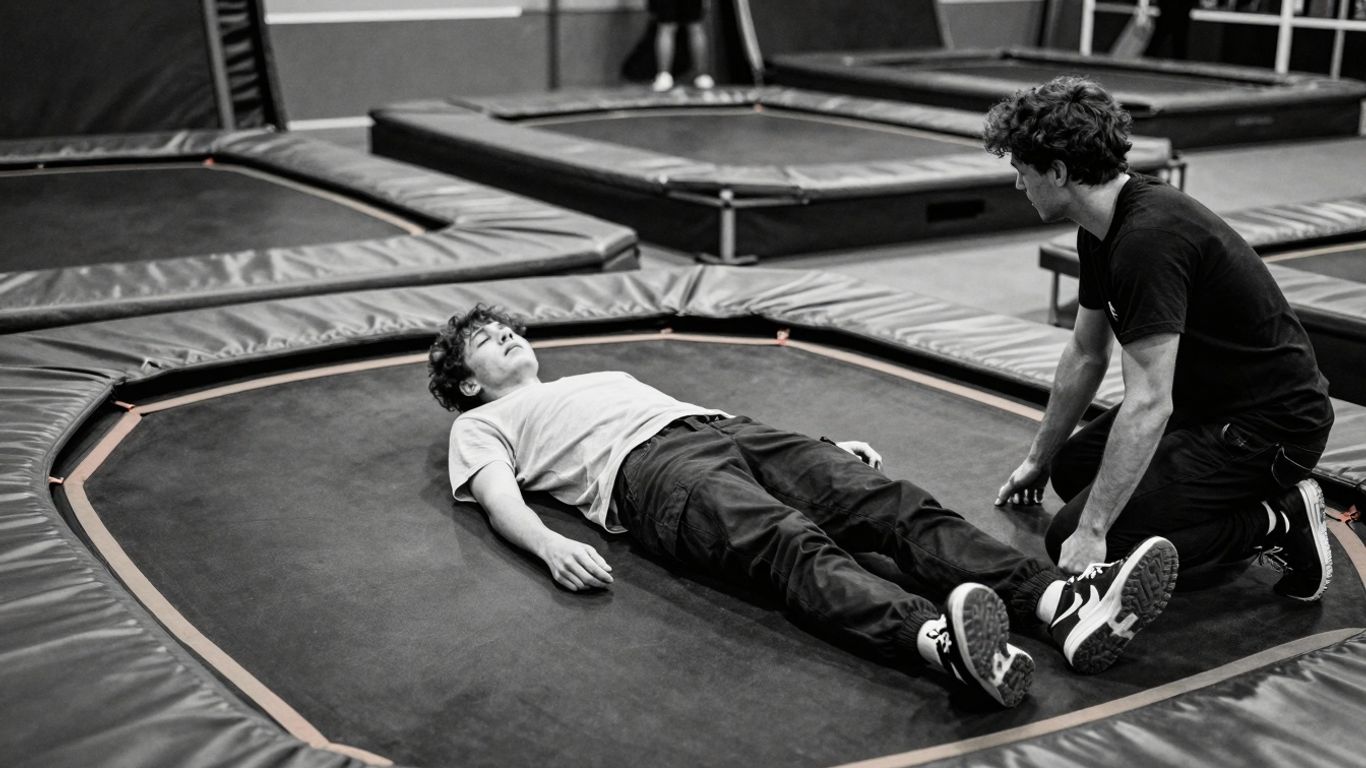
Concussions are a type of traumatic brain injury that can happen at jump parks, even if you don’t get hit directly in the head. They occur when the brain is shaken or jolted inside the skull, often from a sudden impact or forceful movement. This jarring motion can cause the brain to bounce around, leading to temporary or sometimes longer-lasting problems with how the brain works.
While less common than sprains or strains, concussions are a serious concern. They can result from a variety of incidents at a jump park:
- Falls: Landing awkwardly after a jump, especially if you fall from a height or hit your head on the trampoline mat, frame, or padding.
- Collisions: Bumping into another jumper, particularly if one or both of you are moving at high speeds.
- Failed Tricks: Attempting flips or other acrobatic moves without proper training can lead to uncontrolled falls and impacts.
- Sudden Stops: Rapidly stopping or changing direction can sometimes cause the brain to move within the skull.
It’s important to know the signs of a concussion, as they might not always be obvious right away. Some common symptoms include:
- Headache or a feeling of pressure in the head
- Nausea or vomiting
- Dizziness or balance problems
- Sensitivity to light or noise
- Feeling foggy, groggy, or stunned
- Confusion or memory problems
- Changes in mood or behavior
If you suspect someone has a concussion, it’s best to stop jumping immediately and seek medical attention. Trying to ‘tough it out’ can make the injury worse and prolong recovery. Parks often have staff trained to spot these issues, but it’s up to all of us to be aware and report any concerns.
Remember, even if there’s no visible cut or bruise, a concussion is a brain injury that needs to be taken seriously. Proper supervision and following park rules can help reduce the risk, but awareness of the potential for head injuries is key for everyone’s safety.
6. Falls From The Trampoline
Falling off the trampoline is a pretty common way people get hurt at jump parks. Even with those safety nets, it still happens more than you’d think. Sometimes the nets aren’t put up right, or maybe they just make people feel too safe and they try riskier stuff. The most serious injuries often happen when someone falls off the edge.
When you fall off, you could land on the hard ground, the trampoline frame, or even the springs. These impacts can lead to all sorts of problems, from simple bruises and cuts to more severe issues like broken bones or head injuries. It’s especially dangerous for younger kids because their bodies are still developing and they don’t have the same level of coordination as older kids or adults.
Here’s a quick look at what can happen:
- Landing on the frame or springs: This is a direct impact that can cause fractures or deep bruises.
- Hitting the ground: Depending on the height and surface, this can lead to sprains, fractures, or even head trauma.
- Unexpected bounces: Sometimes a weird bounce can send you flying off in an unexpected direction.
It’s really important to stay aware of where you are on the trampoline and try to stay in the center. If you’re visiting a park, pay attention to the rules they have posted. These parks are designed for fun, but safety has to come first, and that includes being mindful of the edges. Remember, even with safety features, trampoline-related injuries can be severe.
Falling off the trampoline might seem obvious, but it’s a major cause of injuries. It’s not just about landing badly; it’s about what you land on when you leave the bouncy surface. The transition from the trampoline to the surrounding area is where a lot of the danger lies.
7. Impact With Trampoline Frame/Springs
Ouch. Hitting the metal frame or those coiled springs on a trampoline is a pretty common way to get hurt at a jump park. Even with padding, it happens. Sometimes the padding shifts, or maybe it’s just not thick enough to really do much when you’re moving at speed.
These impacts can lead to a range of injuries, from nasty bruises and deep cuts to more serious stuff like fractures or dislocations. It’s especially risky if you’re trying a trick and lose control, or if you’re just not paying attention and land too close to the edge.
Here’s a breakdown of what can happen:
- Fractures: Bones can break, especially in the arms and legs, if the force of the impact is strong enough.
- Dislocations: Joints, like shoulders or fingers, can pop out of place.
- Severe Bruising and Lacerations: The metal can cause deep cuts and extensive bruising.
- Sprains: Ligaments around joints can get stretched or torn.
The padding that’s supposed to protect you can sometimes give a false sense of security. It might look like it’s covering everything, but it can wear down or get moved around easily, leaving those hard metal parts exposed.
It’s not just about the padding, though. The design of the trampoline itself plays a big role. Some newer designs are moving away from traditional springs and frames altogether, using different materials to absorb impact and keep jumpers further away from any hard surfaces. This is a big deal for safety.
Think about it: you’re bouncing, maybe doing a flip, and suddenly you’re off course. Instead of landing on the soft mat, you connect with the rigid metal edge or the tightly wound springs. That’s a lot of force concentrated on a small area of your body, and it doesn’t take much to cause damage.
8. Collisions
Okay, so you’re at the jump park, and it’s packed. Everyone’s bouncing, trying out their moves, and then BAM! Someone bumps into you, or worse, you bump into them. These collisions are super common, especially when there are a lot of people sharing the trampolines.
It’s really easy for things to get chaotic when multiple jumpers are on the same trampoline. People are bouncing in different directions, some are trying tricks, and others are just having fun. Without clear space, it’s almost inevitable that someone’s going to cross paths with someone else.
The biggest culprit here is simply too many people on one trampoline. It’s like trying to juggle too many balls at once – eventually, one is going to drop (or in this case, someone’s going to get hit).
Here’s a quick rundown of how collisions happen:
- Unpredictable Bounces: When one person bounces, it affects the whole surface. Someone else might be coming down from their own jump and land unexpectedly close to another person.
- Attempting Tricks: If someone is trying a flip or a spin, they might not be aware of who else is on the trampoline, leading to an accidental impact.
- Lack of Awareness: Sometimes, people just aren’t looking where they’re going or paying attention to their surroundings.
To keep things safer, remember the golden rule: one jumper per trampoline. It might seem obvious, but it’s the most effective way to prevent these kinds of accidents. Stick to the center of the trampoline and away from the edges and springs whenever possible.
These collisions can lead to all sorts of injuries, from minor bumps and bruises to more serious sprains and even fractures if the impact is hard enough or causes someone to fall awkwardly. It’s a good reminder to always be mindful of others around you and to follow the park’s rules about how many people can jump at once.
9. Improper Landing
Landing wrong is a super common way people get hurt at jump parks. It’s not just about sticking the landing perfectly like the pros you see on TV; it’s about avoiding serious injury. When you don’t land square on your feet, or if your body twists in an awkward way, you can put a ton of stress on your joints, especially your ankles and knees. This is how those nasty sprains and strains happen, and sometimes, it can even lead to more serious stuff like fractures.
The key is to control your body throughout the entire jump, from takeoff to landing.
Here are some common landing mistakes and what they can lead to:
- Landing on your back or stomach: This can cause bruising or even more serious spinal injuries if you land hard or at an odd angle.
- Landing with locked knees or elbows: This puts a lot of pressure on those joints and can lead to sprains or even dislocations.
- Twisting your ankle or knee on impact: This is a classic way to get a sprain or tear a ligament.
- Landing off-balance: This often leads to falling awkwardly, which can result in scrapes, bruises, or strains as you try to catch yourself.
It’s easy to get caught up in the excitement and just want to jump as high as possible. But remember, the landing is just as important as the jump itself. Focusing on a controlled descent, even if it means a less flashy finish, is the smartest way to stay safe.
Many parks offer basic orientation sessions that cover how to land safely. Taking a few minutes to learn these basics can make a huge difference. It’s all about bringing your body back to the mat in a stable, controlled way, with your knees slightly bent to absorb the impact. Think of it like landing after a small hop – you bend your knees to soften the blow. Doing that after a big bounce is the same principle, just with more force to manage.
10. Failed Tricks
Trying to pull off a cool flip or a complex maneuver without the right training is a recipe for disaster at a jump park. It’s easy to get inspired watching others, but these advanced moves require practice and skill. When a trick goes wrong, you might land awkwardly, lose your balance, or even hit another jumper. This can lead to all sorts of injuries, from simple twists to more serious breaks.
The biggest issue with failed tricks is the unpredictability of the outcome. You might think you have it under control, but one small mistake in mid-air can send you tumbling in a way you didn’t expect.
Here’s a breakdown of what often happens:
- Loss of Air Awareness: Not knowing where you are in the air makes it impossible to prepare for landing.
- Awkward Landings: This is where most injuries occur – landing on your head, neck, knees, or ankles in a twisted position.
- Collisions: If you don’t complete the trick, you might fall back onto the trampoline surface and collide with someone else who is jumping.
It’s really important to remember that these parks aren’t professional training facilities. While they’re fun, they’re also places where accidents happen, especially when people attempt things beyond their skill level. Trying advanced moves without proper instruction is a common cause of injuries at places like trampoline parks.
Attempting flips or somersaults without proper training is a significant risk factor. The forces involved in these movements, combined with a lack of control, can easily result in landing incorrectly, leading to sprains, fractures, or even head and neck injuries. It’s best to stick to basic jumping unless you have professional guidance.
Many injuries happen because people overestimate their abilities. A simple jump is one thing, but adding rotations and flips introduces a whole new level of risk. If you’re new to jumping or haven’t mastered the basics, it’s wise to avoid trying advanced tricks. Focus on controlled bouncing and safe landings first. Your body will thank you later.
Even the best plans can go wrong sometimes. In our "10. Failed Tricks" section, we look at what happens when things don’t go as expected. It’s a good reminder that mistakes are part of learning. Want to see more about how we handle tough situations? Visit our website for more insights.
Wrapping Up Your Jump Park Adventure Safely
So, we’ve gone over the common bumps, bruises, and even the more serious stuff that can happen at a jump park. It’s a lot to think about, right? But honestly, most of these injuries boil down to a few key things: not following the rules, trying moves you’re not ready for, or just plain bad luck with a landing. The good news is, a lot of this is totally preventable. By sticking to the basics, like jumping one person per trampoline, watching where you land, and maybe taking a moment to learn the ropes before you go wild, you can seriously cut down on the risks. And hey, choosing a place that really cares about safety, with good equipment and staff who are actually watching, makes a huge difference too. Have fun out there, but remember to be smart about it!
Frequently Asked Questions
What are the most common injuries at trampoline parks?
The most frequent injuries include sprains and strains, especially in the ankles and knees. Fractures and dislocations, particularly in the arms and legs, also happen. Cuts, bruises, and scrapes are common too. More serious issues like concussions and head, neck, or spinal injuries can occur, though they are less common.
How do sprains and strains happen on trampolines?
Sprains and strains usually happen when you land awkwardly or twist your ankle or knee during a jump. The sudden stops and starts put a lot of stress on your ligaments and muscles. A simple misstep can easily lead to these injuries.
What causes fractures and dislocations at jump parks?
Fractures and dislocations often happen when someone lands very hard or in an unusual way, putting too much force on a bone or joint. Trying to break a fall with an outstretched hand or landing directly on a shoulder can cause a dislocation. Broken bones, especially in kids, can happen from the impact of landing incorrectly.
Are head, neck, and spinal injuries common?
While not as common as sprains, head, neck, and spinal injuries are the most serious risks. These can happen from landing on your head or neck after a failed flip or from colliding with another person. In the worst cases, these injuries can lead to lifelong problems.
How can I prevent injuries at a trampoline park?
To stay safe, always follow the park’s rules, like jumping one person per trampoline and landing in the center. Wear appropriate clothing and grip socks. Avoid doing flips or advanced tricks unless you’re trained and supervised. Always be aware of your surroundings and know your limits.
Why is it important to follow park rules?
Park rules are designed to keep everyone safe. For example, having only one person on a trampoline at a time prevents dangerous collisions. Jumping in the center helps you avoid the metal frames and springs. Following these guidelines significantly lowers your chance of getting hurt.