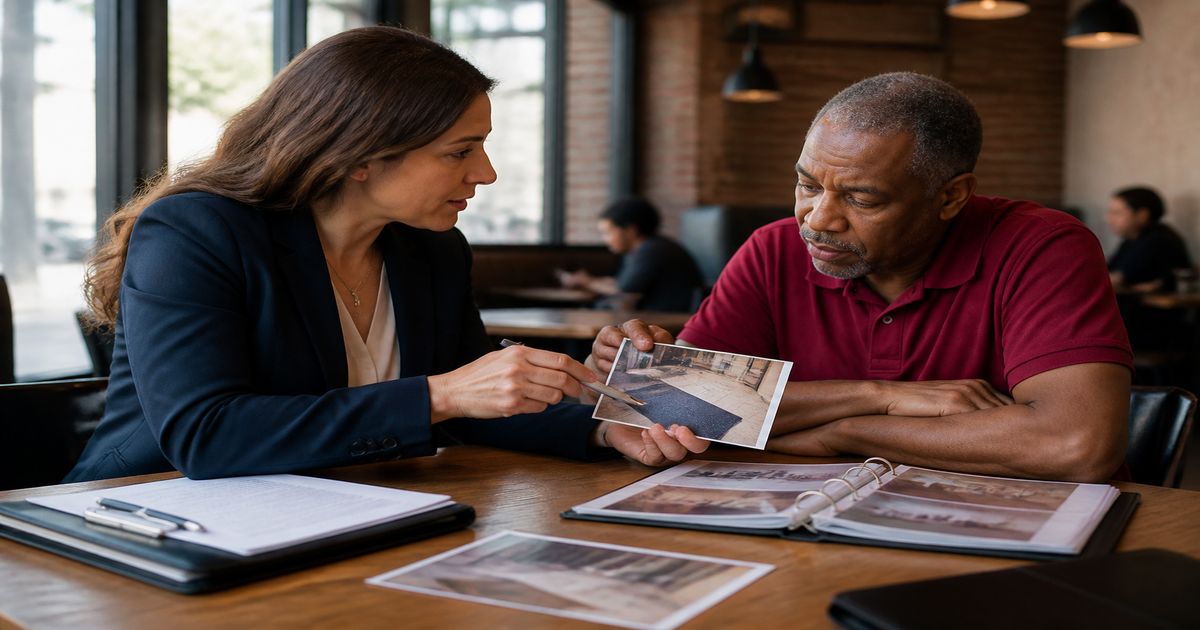
Key Takeaways A successful premises liability claim requires demonstrating that a property owner breached their duty of care. Key considerations include: - Injuries must stem from known or should-have-been-known hazardous conditions. - Documenting the scene immediately is crucial for liability evidence. - Proving notice of the danger determines the property owner's fault. - Comparative negligence can reduce total compensation in Albany courts. - Professional legal guidance is essential for securing fair case outcomes. ## Understanding the legal framework for premises liability ### Definition of premises liability in New York law Premises liability is the legal doctrine that holds property owners accountable for injuries occurring on their land or premises due to negligence. To succeed in an Albany claim, you must establish that the owner owed you a duty of care, breached that duty by failing to maintain the property safely, and that this failure caused your injuries. Understanding these fundamental rules is the first step toward seeking justice. ### Types of properties covered under Albany regulations These regulations span a wide array of environments both public and private. Whether you are in a commercial retail environment or a residential apartment complex, the law mandates that the environment remains free of foreseeable hazards. This protection extends to grocery stores, offices, hotels, and even private homes where guests have been welcomed for lawful purposes. ### Classification of visitors: invitees, licensees, and trespassers The legal status of a visitor significantly impacts their rights to recovery under state law. Invitees are people invited onto the property for a business purpose, such as a customer in a store, and they receive the highest level of care. Licensees, such as social guests, also receive protection, while trespassers are typically owed the least protection except in very specific circumstances. ## Establishing the property owner's duty of care ### Determining legal responsibilities to guests Property owners have the duty to inspect their land and remediate dangerous conditions. If they are providing a space for a visitor, that space must be reasonably safe for its intended use. This responsibility is similar to how a family might seek professional support when working with Clear Stream Monuments to create a respectful tribute; you expect the provider to handle your needs with care and attention to detail. ### Standards for maintaining safe premises A standard of reasonable care dictates that owners must keep aisles clear of trip hazards, ensure lighting is sufficient, and promptly notify guests of ongoing repairs or spills. Achieving this standard requires proactive maintenance rather than reactive patching, as owners must maintain their property to a standard that prevents common accidents. To ensure safety, owners often follow a structured maintenance checklist like the one provided below for retail locations: 1. Regular flooring inspection every four business hours. 2. Prompt signage placement around any liquid spills. 3. Immediate repair of all uneven walkway surfaces. 4. Weekly verification of interior lighting fixtures. These simple procedural steps help define the difference between a maintained property and a neglected, dangerous one. ### Distinguishing between natural and artificial hazards Determining whether an hazard is natural or artificial can be complex. Typically, artificial hazards created by the owner are easier to prove as negligent, whereas natural hazards like snow or ice involve shifting standards regarding the time allowed for cleanup. Below is a breakdown of how these hazards are generally characterized in legal disputes: | Hazard Type | Description | Liability Potential | | :--- | :--- | :--- | | Artificial | Man-made issues like spills or loose wires | High | | Natural | Weather-related issues like ice or snow | Conditional | | Structural | Defective flooring or broken stairs | High | Navigating these categories requires a focused review of site conditions at the time of your accident. ## Building your case through evidence collection ### Importance of photographic and video documentation The visual record of your accident site serves as the backbone of your claim, proving exactly what caused your harm. Before you leave the location, capturing clear images of the hazard allows you to lock in the evidence as it existed during the incident. ### Obtaining official incident or police reports Official reports act as a neutral third-party verification that an incident occurred when and where you claim. These documents can be difficult to obtain later if not requested promptly, so initiating the process for a police log or a manager incident report shortly after the event is necessary for a strong foundation. ### Securing witness statements and contact information If anyone observed your fall or the condition of the area, their perspective is invaluable for proving liability. You should collect the contact information for these individuals, as they can explain the situation to investigators or adjusters if the owner disputes the timeline of the hazard. ### Organizing medical records and injury documentation Documentation of your health is the final component of a winning argument. Engaging in comprehensive orthopedic surgical recovery requires meticulous records that prove the duration, expense, and impact of your injuries on your daily life, effectively connecting the accident to the damage you sustained. ## Proving actual or constructive notice of a hazard ### Defining actual notice versus constructive notice To win your case, you must prove that the owner knew, or should have known, about the hazard. Actual notice often involves showing the owner had direct, documented knowledge, whereas constructive notice relies on showing the hazard existed long enough that a reasonable inspection would have uncovered it. ### Evidence of prior complaints or similar incidents Finding records of earlier reports regarding the same issue can show a pattern of negligence. If other shoppers previously reported the same loose carpeting or broken stair, evidence of those claims significantly boosts your case by demonstrating that the owner ignored repeat warnings. ### Proving the hazard existed for a sufficient length of time This is often the hardest part of a claim, as you must estimate how long the hazard survived before the accident occurred. Digital evidence, such as timestamped time-lapse footage, is often more useful than human memory for establishing these specific intervals. ### Limitations regarding latent property defects Some defects are hidden, or latent, meaning the owner might claim they could not have known about them despite regular inspections. Successfully overcoming this argument usually requires expert testimony to demonstrate that the defect should have been identifiable via a diligent maintenance program. ## Addressing comparative negligence in Albany courts ### How shared fault impacts potential recovery Many insurance companies will attempt to argue that your own lack of awareness contributed to the fall. Understanding Georgia's comparative negligence law is important for measuring how the distribution of fault can limit your final damage award, even if, as is often the case, the owner is primarily responsible. ### Factors that reduce compensation awards Deductions generally occur if the owner can show you were distracted during your gait or ignored clearly visible warnings posted near the hazard. Identifying these vulnerability points is a key part of our defense planning when representing clients. ### Defending against claims of personal carelessness You have to be prepared for the owner to portray you as solely accountable for the slip. A strong case mitigates these claims by showing the hazard was sufficiently camouflaged or unavoidable given the circumstances of the visit. ## Partnering with an Albany premises liability lawyer ### Navigating complex liability statutes and deadlines Missing a filing deadline can forfeit your right to seek compensation entirely. A dedicated legal team, including experienced premises liability lawyers such as Horn Wright, LLP, Shrable Law Firm, Finkelstein & Partners, LLP, or Monaco Cooper Lamme & Carr PLLC, will ensure that every document is filed correctly and on time. ### Utilizing expert testimony for engineering or safety analysis Sometimes the condition of a ramp, stairway, or floor needs to be evaluated by a structural engineer to prove it failed to meet safety codes. Expert witnesses can present this technical data in a way that resonates with a judge or jury, far better than lay explanation. ### Skillful negotiation with property owner insurance providers Dealing with insurers requires a firm hand and clear, evidence-based communication. The insurance company represents the property's financial interest and will often pressure victims to accept lowball settlements, but skilled counsel knows exactly how to protect your interests during these tense negotiations. ### Calculating non-economic damages like pain and suffering Beyond the medical bills, your non-economic suffering includes the long-term impact on your ability to work, socialize, and participate in family life. Accurately quantifying this pain is how you ensure that your recovery covers not just the immediate surgical costs but the entirety of your life change. ## Conclusion By thoroughly documenting your accident, establishing the owner's knowledge of the hazard, and securing professional representation, you significantly increase your strength in Savannah premises liability negotiations. While no result is guaranteed, a patient, evidence-based approach is your best path forward for recovering the compensation you deserve. ## Frequently Asked Questions ### What is the first thing I should do if I am injured on someone else's property? You should immediately report the incident to the property owner or manager and request a copy of the incident report. ### Can I file a claim if I was partially at fault for my accident? Yes, you can still file a claim, but your potential compensation may be reduced by the percentage of fault assigned to you. ### How long do I have to file a premises liability lawsuit in New York? The statute of limitations typically sets a strict deadline, so you must consult with an attorney to start your claim before the window closes. ### Does the property owner always have to pay for an injury occurring there? Not necessarily; you must prove the owner was negligent and that their failure to maintain the premises caused your injury. ### What is the difference between actual and constructive notice? Actual notice means the owner was told about the hazard, while constructive notice means it existed long enough that they should have discovered it. ### Will my case need to go to court? Many premises liability claims are settled through negotiations with insurance providers, though a skilled lawyer will prepare every case as if it might go to trial. ### What damages can I recover in a premises liability case? You may be entitled to compensation for medical expenses, lost wages, non-economic damages like pain and suffering, and other accident-related costs.