August 17, 2026
Truck Accident Lawyer
· By Vishay Singh
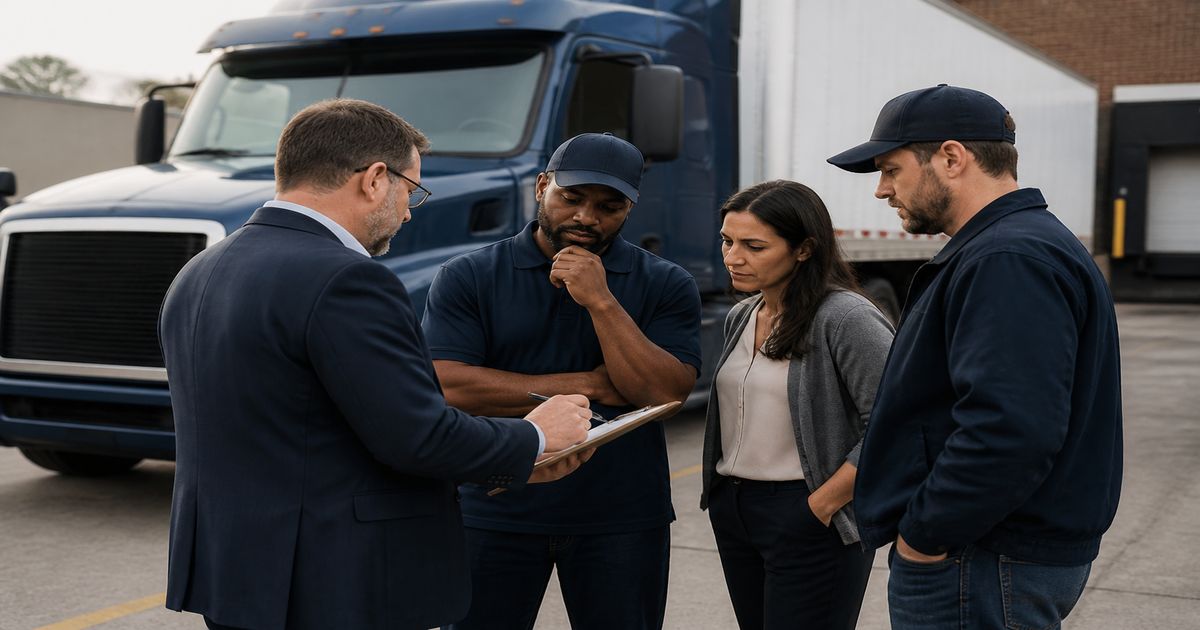
When a commercial truck accident occurs, figuring out who can be held responsible can be tricky. There are often multiple parties involved, from the truck driver to the companies that own the trucks or loaded them up. Understanding who you can potentially sue is crucial if you’re looking to recover damages for your injuries. This article breaks down the different parties that might be liable in a truck accident and how a truck accident lawyer can help you navigate the process.
Table of Contents

Truck accidents can be incredibly complex, especially when figuring out who’s at fault. It’s rarely as simple as just blaming the driver. Several parties could share responsibility, and identifying them is key to getting fair compensation. Let’s break down some of the most common players.
The truck driver is often the first person that comes to mind, and for good reason. Driver error is a frequent cause of accidents. This could be anything from distracted driving (texting, eating, etc.) to driving under the influence, or violating FMCSA regulations about hours of service. If a driver is negligent, they can absolutely be held liable. It’s important to investigate their driving record and activities leading up to the crash.
Trucking companies also bear a significant responsibility. They’re in charge of hiring, training, and supervising their drivers, as well as maintaining the trucks. If a company cuts corners on safety, pushes drivers to meet unrealistic deadlines, or fails to properly maintain its vehicles, they can be held accountable.
Believe it or not, how a truck’s cargo is loaded can also contribute to accidents. If the cargo isn’t properly secured or the truck is overloaded, it can become unstable and lead to a crash. The individuals or companies responsible for loading the cargo can be held liable if their negligence contributed to the accident. This is a less obvious party, but an important one to consider.
Identifying all liable parties is crucial in maximizing compensation in your truck accident lawsuit. By involving all responsible entities, you increase the chances of receiving full financial compensation for your damages. This complex process often requires the expertise of a skilled personal injury attorney well-versed in handling truck accident cases to navigate the legal complexities and ensure all avenues for compensation are explored. Choose your legal representation wisely to secure the best possible outcome for your case.
Trucking companies don’t just have a professional responsibility; they have a legal one. They can be held liable for accidents if they fail to follow safety regulations. This goes beyond just the actions of their drivers. It’s about the company’s policies, practices, and oversight.
Trucking companies can be held responsible for the actions of their employees under a legal concept called vicarious liability. This means that if a truck driver’s negligence causes an accident, the company can be held liable, even if the company itself didn’t directly do anything wrong. This is because the driver is acting as an agent of the company. Vicarious liability ensures that victims of truck accidents have avenues for seeking compensation and incentivizes companies to prioritize safety measures and proper training for their drivers. Identifying negligence by trucking companies is crucial to maximize compensation in a truck accident lawsuit.
It’s the trucking company’s job to make sure they hire safe and competent drivers. If they don’t do their due diligence, they can be held liable. This includes:
Failing to properly screen drivers can lead to dangerous individuals operating large commercial vehicles. This negligence puts everyone on the road at risk and can result in serious accidents.
If a company hires a driver with a history of reckless driving or substance abuse, and that driver causes an accident, the company can be held liable for negligent hiring.
Trucking companies have a responsibility to maintain their vehicles in safe working order. This includes regular inspections, repairs, and preventative maintenance. Failing to properly maintain a truck can lead to mechanical failures that cause accidents. Here’s a simplified example of a maintenance schedule:
| Inspection Type | Frequency | Items Checked |
|---|---|---|
| Pre-Trip | Daily | Brakes, tires, lights, fluids |
| Periodic | Monthly | Engine, transmission, suspension, steering |
| Annual | Yearly | Complete inspection to meet DOT requirements |
If a truck accident is caused by a mechanical defect due to poor maintenance, the trucking company can be held liable. This could include things like brake failure, tire blowouts, or steering malfunctions.
Sometimes, a truck accident isn’t just about driver error. It can come down to a problem with the truck itself. That’s where product liability comes in. If a defective part caused or contributed to the crash, the manufacturer, distributor, or designer of that part could be held responsible. It’s a whole different angle to consider when figuring out who’s at fault.
Think about it: trucks are complex machines with tons of parts. If a brake fails because it was poorly made, or a tire blows out due to a manufacturing defect, the company that made that part could be on the hook. This means they could be sued for damages if that defective part led to an accident. It’s not always easy to prove, but it’s a real possibility.
It’s not just the manufacturer that can be held liable. The distributors and suppliers who put those parts into the stream of commerce can also face legal action. If they knew, or should have known, about a defect and still sold the part, they share some of the responsibility. This adds another layer to the investigation, as you have to trace the part back to its source.
Even before a part is made, its design can be flawed. If the design itself is inherently dangerous, the designers can be held liable. This could be anything from a poorly designed suspension system to a fuel tank that’s prone to rupture in a collision. Proving a design defect often requires expert testimony and a thorough understanding of engineering principles. It’s a complex area, but it’s important to consider when looking at the causes of a truck accident. A car accident lawyer in Georgia can help you navigate these complexities.
Product liability cases can be tough. You’ve got to prove the part was defective, that the defect caused the accident, and that you suffered damages as a result. It often involves bringing in experts to analyze the parts and testify about the defects. It’s not a simple process, but it’s a necessary one if a defective product played a role in your accident.
It’s easy to overlook, but government bodies play a big role in keeping our roads safe. When things go wrong, like in a truck accident, they might share some of the blame. It’s not always straightforward, but here’s the gist:
Local governments, like city councils, are in charge of maintaining roads within their boundaries. This means fixing potholes, ensuring proper signage, and managing traffic flow. If a dangerous road condition contributes to an accident, the municipality could be held liable. For example, if a traffic light is malfunctioning and causes a collision, the city might be responsible. However, suing a municipality often involves navigating complex legal procedures and proving negligence.
State DOTs have a broader scope than municipalities. They oversee major highways, bridges, and other large-scale infrastructure projects. Their responsibilities include:
If a state DOT fails to address a known safety hazard, such as inadequate guardrails on a highway, they could face legal action following a truck accident. It’s worth noting that these cases can be tough because of sovereign immunity, which protects government entities from certain lawsuits.
Sometimes, governments hire private companies to handle road maintenance. These contractors are responsible for things like:
If a contractor’s negligence leads to an accident, they can be held liable. For instance, if a contractor fails to properly mark a construction zone, resulting in a collision, they could be sued. Establishing liability often involves demonstrating that the contractor breached their duty of care.
It’s important to remember that suing a government entity or contractor is different from suing a private individual or company. There are often specific procedures and deadlines that must be followed, and the burden of proof can be higher. Consulting with a lawyer experienced in truck accidents is essential to navigate these complexities.
It’s pretty common to think about suing the person who directly caused an accident, like the driver who ran a red light. But what happens when that person is working for someone else? That’s where employer liability comes in. Basically, it means that in some situations, the employer can be held responsible for the actions of their employees. This is especially true in truck accident cases.
When someone is a direct employee, the rules are pretty straightforward. If they mess up while doing their job, their employer can often be held liable. This is based on the idea that the employer has control over the employee’s actions. Think of it like this: if a truck driver, who is a direct employee of a trucking company, causes an accident because they were speeding, the trucking company could be on the hook.
Things get a little trickier when we’re talking about independent contractors. These are people who are hired to do a specific job, but they aren’t considered employees. Generally, employers aren’t liable for the actions of independent contractors. However, there are exceptions. For example, if the employer was negligent in hiring the independent contractor, or if they exercised a high degree of control over how the work was done, they might still be liable. Determining negligence is key in these cases.
There are situations where you can’t sue your own employer for injuries. This usually happens in workplace accidents. Instead of suing your employer directly, you might have to look for other liable parties, like the manufacturer of a faulty tool or the owner of a dangerous property. It’s a weird exception, but it’s important to keep in mind.
Employer liability exists because companies benefit from the work of their employees, so they should also bear the risks associated with those actions. This encourages companies to prioritize safety and proper training.
Here’s a simple breakdown:

Truck accidents? Yeah, they’re a mess. And dealing with insurance companies after one? It can feel like you’re stuck in a never-ending loop. They’re supposed to help, but sometimes it feels like they’re working against you. Let’s break down what you need to know.
Okay, so truck drivers are usually covered by some kind of insurance policy. It could be their own personal policy, but more often than not, it’s a commercial policy held by the trucking company they work for. These policies are supposed to cover damages and injuries if the driver causes an accident. But here’s the thing: figuring out the specifics of that coverage can be tricky. You’ll need to know policy limits, what exactly is covered, and whether there are any exclusions that could affect your claim. It’s not always straightforward, and that’s where things get complicated. Understanding the insurance coverage is key to getting what you deserve.
Going after a trucking company’s insurance is a whole different ballgame compared to a regular car accident claim. These companies usually have big insurance policies and teams of lawyers whose job is to minimize payouts. You can bet they’ll fight tooth and nail to protect their bottom line. You’ll need to gather evidence, build a strong case, and be prepared for a long, drawn-out negotiation. It’s not for the faint of heart, and honestly, you’ll probably want someone on your side who knows the ins and outs of truck accident claims.
Negotiating with insurance companies is like a chess match. They’ll start with a low offer, hoping you’ll take it just to make the whole thing go away. Don’t fall for it! You need to know what your claim is really worth, and that means considering all your damages: medical bills, lost wages, property damage, and pain and suffering. Be prepared to counter their offers, and don’t be afraid to walk away if they’re not being fair. Remember, they’re not your friend. They’re a business, and their goal is to pay out as little as possible.
Dealing with insurance companies after a truck accident can be incredibly stressful. They might try to pressure you into accepting a settlement that’s way less than what you deserve. It’s important to stay strong, know your rights, and don’t be afraid to fight for what’s fair.
Here’s a simple table showing how different factors can affect your settlement:
| Factor | Impact on Settlement | Example |
|---|---|---|
| Severity of Injury | Higher | Spinal cord injury |
| Lost Wages | Higher | Long-term disability |
| Property Damage | Variable | Totaled vehicle vs. minor repairs |
| Fault | Lower (or none) | Partially at fault reduces compensation |
And here are some things to keep in mind when negotiating:
Truck accidents can be incredibly complex, and the aftermath can be overwhelming. Figuring out who’s responsible and dealing with insurance companies is a headache you probably don’t need on top of everything else. That’s where a lawyer comes in.
Having a truck accident lawyer on your side can really change the game. These cases aren’t like fender-benders; they involve federal regulations, multiple parties, and often, significant damages. A lawyer knows how to navigate all of that. They can investigate the accident, gather evidence, and build a strong case on your behalf. Plus, they’ll handle all the communication with the insurance companies, so you don’t have to stress about getting lowballed. If you’ve been involved in a blindspot accident, you should seek legal help.
After a truck accident, it’s easy to feel lost. Here’s a quick rundown of what you should do:
It’s important to remember that the other parties involved, especially the trucking company and their insurance, will immediately begin building their defense. The sooner you get a lawyer involved, the better protected you will be.
Building a strong case means gathering as much evidence as possible. This includes:
Having a lawyer who knows how to gather and present this evidence can make a huge difference in the outcome of your case. They can help you understand your rights and fight for the compensation you deserve. If you’re dealing with insurance coverage for truck drivers, a lawyer can help you navigate the complexities.
In the end, figuring out who to sue after a truck accident in Chamblee can be tricky. You might think it’s just the driver, but it could be the trucking company, the truck owner, or even the folks who loaded the cargo. Sometimes, government agencies might be involved too, especially if bad road conditions played a part. It’s important to look at all angles to make sure you get the compensation you deserve. If you’ve been in an accident, talking to a lawyer can help you understand your options and who might be held responsible.
You can sue several parties after a truck accident. This includes the truck driver, the trucking company, and sometimes even the manufacturer of the truck or its parts. It all depends on who was at fault.
Yes, if you were hit by a truck, it’s a good idea to hire a lawyer. They can help you understand your rights and guide you through the process of getting compensation.
Vicarious liability means that a company can be held responsible for the actions of its employees. For example, if a truck driver causes an accident while working, the trucking company can also be sued.
Yes, you can sue the trucking company if the driver was at fault. Companies are often held liable for their drivers’ actions, especially if the driver was acting within the scope of their job.
If a faulty part caused the accident, you might be able to sue the manufacturer of that part. This is called product liability, and it holds companies responsible for creating unsafe products.
To prove who is at fault, you need evidence such as police reports, witness statements, and any available video footage. A lawyer can help gather this evidence and build a strong case.
Related Articles
August 17, 2026

July 31, 2026
Free Case Evaluation
Every consultation is confidential and free of charge. There is no fee unless we recover for you.